|
Product Information |
|
Product name |
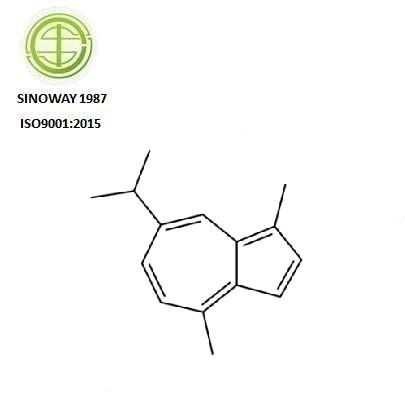
Guaiazulene |
|
Molecular Formula |
C15H18 |
|
Molecular Weight |
198.30 |
|
CAS No. |
489-84-9 |
|
Quality Standard |
99.9% up by HPLC, with total impurities < 0.1% |
|
Appearance |
Dark blue liquid or crystal |
|
COA of Guaiazulene |
|
Test Item |
Specification |
Results |
|
Appearance |
Dark blue liquid or crystal |
Conforms |
|
Purity (GLC) |
≥ 99.9% |
99.91% |
|
Freezing Point |
≥ 30。C |
30.2。C |
|
Water |
≤ 1‰ |
0.6‰ |
|
Residue on Ignition |
≤ 1‰ |
0.7‰ |
|
Conclusion |
Conforms the enterprise standards |
|
|
Usage |
Guaiazulene (CAS 489-84-9) — Anti-Inflammatory & Wound-Healing Ingredient
Guaiazulene is a blue, azulene-derived bicyclic sesquiterpene used as an anti-inflammatory, antiseptic and tissue-regenerating agent in pharmaceutical, oral care and cosmetic formulations. Naturally occurring in guaiac wood and related essential oils, it combines soothing activity with granulation-promoting properties, making it a long-established choice for burn care, sensitive-skin products, toothpaste and throat preparations.
1. Anti-inflammatory: helps calm irritated, reactive and inflamed tissue.
Promotes granulation & wound healing — supports regeneration of damaged skin and mucosal tissue.
2. Antiseptic & astringent: suitable for topical preparations where cleansing and tissue tightening are required.
3. Soothing for sensitive skin: widely used in after-sun, baby care and post-procedure formulas.
4. Protective against heat and radiation: induced stress — used in preparations designed to shield skin from thermal and radiation irritation.
5. Natural blue colorant: delivers a characteristic blue tint, adding visual differentiation to formulations.
1. Topical dermatology & skin care
Used in ointments, creams and gels as an anti-inflammatory and granulation-promoting agent. Documented uses include burns, scalds, chapped skin, frostbite, eczema and dermatitis, as well as protection against heat- and radiation-induced skin irritation.
2. Gastrointestinal preparations
Employed in formulations for gastric and duodenal ulcers, acute and chronic gastritis, and primary or secondary gastritis.
3. Ophthalmic preparations
Used in eye drops indicated for acute conjunctivitis, allergic conjunctivitis, superficial keratitis and scleritis.
4. Oral & throat care
Incorporated into mouthwashes and chewable lozenges for pharyngitis, tonsillitis (amygdalitis) and dental trauma.
5. Wound care & dressings
Applied in bandages and wound dressings for anti-inflammatory action and accelerated wound healing.
6. Daily oral care products
Used in toothpaste and mouth rinses for anti-inflammation, gingivitis and oral ulcer care.
7. Cosmetics
Functions as an antimicrobial and perfuming ingredient (per cosmetic ingredient databases), while contributing a distinctive natural blue hue to creams, shampoos, bath oils and serums for sensitive skin.
1. Use level: typically 0.01–0.5% in the oil phase for color and soothing effect; final level depends on the claim and regulatory framework.
2. Incorporation: pre-dissolve in ethanol or a suitable oil at 40–50 °C, then incorporate into the emulsion under low light.
3. Compatibility: works well alongside antioxidants such as tocopherol; pairs synergistically with chamomile extract.
Stability note: guaiazulene is light-sensitive — minimize light exposure during processing and use opaque or UV-protective packaging.

Sinoway was established in 1987, and is specialized in research, development, custom manufacturing and trading of pharmaceutical APIs, Intermediates, health & food supplements, cosmetic raw materials, herbal extracts, FDFs and custom service all over the world.


 IPv6 network supported
 English
 中文
中文 français
 Deutsch
 русский
 español
 português
 العربية
 日本語
日本語 한국의
한국의 Türkçe