≥99.5% by HPLC
Halal, Kosher, FSSC22000, NSF-GMP certificate
|
Product Information |
|
Product name |
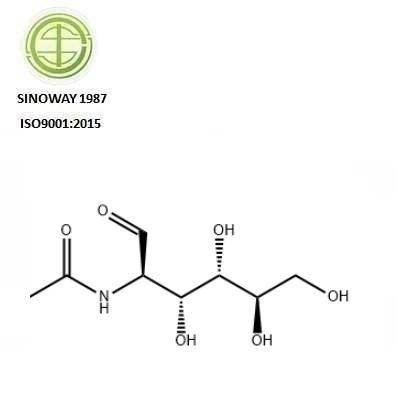
N-Acetyl glucosamine; O-Acetyl-D-glucosamine; NAG; GlcNAC |
|
CAS No. |
7512-17-6 |
|
Molecular Formula |
C8H15NO6 |
|
Molecular Weight |
221.21 |
|
Quality |
≥99.5% by HPLC Halal, Kosher, FSSC22000, NSF-GMP certificate |
|
Appearance |
White or near white drystalline powder or granules |
|
COA |
|
Test Items |
Specifications |
Results |
|
Appearance |
White or near white crystalline powder or granules |
White crystalline powder |
|
Odor |
With the inherent smell of this product, no odor |
Conforms |
|
Taste |
With the inherent taste of this product, no unusual taste |
Conforms |
|
Assay(on dry basis) |
98.0-102.0% |
99.91% |
|
Luminousness |
≥97.0% |
99.2% |
|
Specific rotation (20℃) |
+39.0~+43.0° |
40.82° |
|
pH (1% aqueous solution) |
6.0-8.0 |
6.69 |
|
Moisture content |
≤0.5% |
0.18% |
|
Ash content |
≤0.1% |
0.01% |
|
Chloride |
≤0.1% |
<0.1% |
|
Iron |
≤10mg/kg |
<10mg/kg |
|
Melting point |
196~205℃ |
Conforms |
|
Lead(Pb) |
≤0.4mg/kg |
<0.4mg/kg |
|
Arsenic(As) |
≤0.5mg/kg |
<0.5mg/kg |
|
Mercury(Hg) |
≤0.3mg/kg |
<0.3mg/kg |
|
Cadmium |
≤0.1mg/kg |
<0.1mg/kg |
|
Bacterial endotoxin |
Measured value |
37.5EU/g |
|
Total bacteria count |
≤1000cfu/g |
10cfu/g |
|
Total yeast and mold count |
≤100cfu/g |
<10cfu/g |
|
Coliform group |
≤0.92MPN/g |
<0.3MPN/g |
|
Salmonella |
Negative/25g |
ND |
|
Staphylococcus |
Negative/25g |
ND |
|
Conclusion |
The result complies with the runhan quality standard of N-Acetyl glucosamine. |
|
|
Usage |
N-Acetyl Glucosamine (NAG / GlcNAc)
N-Acetyl Glucosamine (N-Acetyl-D-Glucosamine, also known as NAG or GlcNAc; CAS 7512-17-6) is the acetylated amino sugar naturally present in the human body and the direct building block of hyaluronic acid, chondroitin sulfate, keratan sulfate and mucosal glycoproteins. Unlike glucosamine hydrochloride or glucosamine sulfate, which must be acetylated in the body before entering these pathways, NAG is absorbed and utilised directly — which is why it works across three application areas rather than one. In skin care, it is one of the few cosmetic actives with vehicle-controlled clinical evidence for reducing facial hyperpigmentation: topical 2% NAG reduced hyperpigmentation in an 8-week, double-blind, split-face trial, with a greater effect when combined with 4% niacinamide. Oral supplementation (500–1,000 mg/day) has also been shown to significantly increase stratum corneum moisture content in placebo-controlled studies. In gut health, NAG serves as a precursor for the mucin and glycosaminoglycan layer of the intestinal mucosa. In joint health, it supports cartilage matrix synthesis as a precursor to hyaluronic acid and proteoglycans, and has been studied in combination with chondroitin sulfate for self-reported knee function. From a formulation standpoint, NAG is a low-molecular-weight (221 Da), freely water-soluble, heat- and pH-stable crystalline powder with low hygroscopicity and a mildly sweet taste — easy to incorporate into capsules, tablets, powder blends, beverages and topical emulsions. It carries no sodium or potassium load, unlike stabilised glucosamine sulfate, and our fermentation-derived grade is shellfish-free, allergen-free, vegan and suitable for paediatric and premium applications, while a crustacean-derived grade remains available for cost-sensitive joint formulations.

Sinoway was established in 1987, and is specialized in research, development, custom manufacturing and trading of pharmaceutical APIs, Intermediates, health & food supplements, cosmetic raw materials, herbal extracts, FDFs and custom service all over the world.


 IPv6 network supported
 English
 中文
中文 français
 Deutsch
 русский
 español
 português
 العربية
 日本語
日本語 한국의
한국의 Türkçe