Customer support

xie@china-sinoway.com
EnglishEnglish
banner
Polypeptides
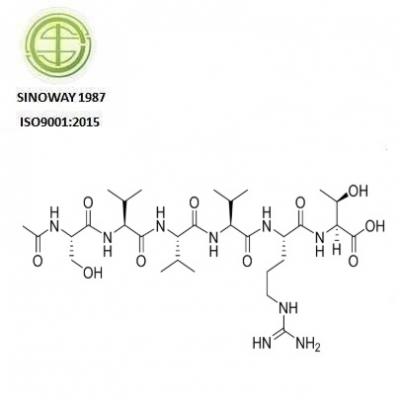
In the 1980s, almost all peptides in clinical trials were less than 10 amino acids in length. Due to the continuous maturation and improvement of peptide synthesis technology, the average length of peptides gradually increased. At present, long peptide chains up to 40 amino acids in length can also be successfully developed.

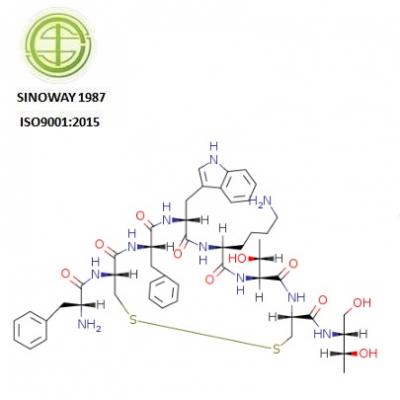
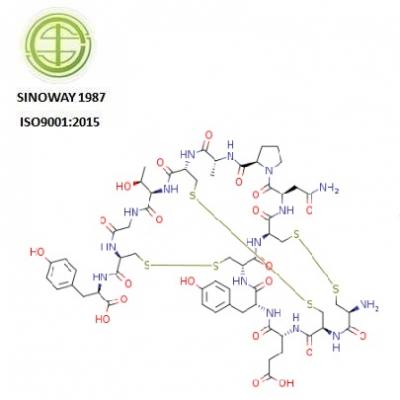
From natural extraction to artificial synthesis, peptides have shown unique advantages in clinical application and production and preparation methods. In clinical practice, peptide drugs are similar to recombinant protein drugs and monoclonal antibodies, and have the advantages of strong specificity and good efficacy. In terms of production and preparation methods, peptide drugs are close to small molecule drugs, with high purity, controllable quality, and easy structure. With certain characteristics, peptide therapy has been considered as a highly selective, effective and relatively safe potential therapy. The world's most representative peptide are liraglutide, duraglutide, glatiramer, leuprolide, octreotide, goserelin and exenatide.
  • LIRAGLUTIDE
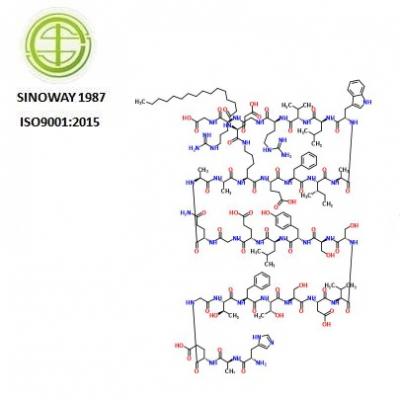
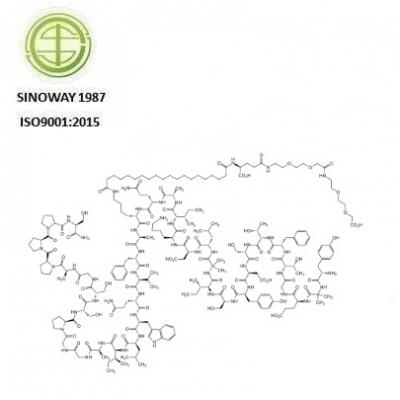
    Product Information Product name Liraglutide Sequence H-His-Ala-Glu-Gly-Thr-Phe-Thr-Ser-Asp-Val-Ser-Ser-Tyr-Leu- Glu-Gly-Gln-Ala-Ala-Lys[N6-[N-(1-oxohexadecyl)-L-γ-glutamyl]- -Glu-Phe-Ile-Ala-Trp-Leu-Val-Arg-Gly-Arg-Gly-OH CAS No. 204656-20-2 Molecular Formula C172H265N43O51 Molecular Weight 3751.20 Storage  2~8℃ Appearance White to off-white crystalline powder COA of Liraglutide Test Specification Results Appearance: White to off-white crystalline powder or lumps White powder Identity: 3751.2±1.0 3751.1 Purity (By HPLC) : Not Less than 98.0%; 99.51% Residual solvents: ≤0.25%total; ≤0.1%individual; ≤0.01%CH2CN Complies Related Peptide Total Impurity ≤ 2.0% Largest Single Impurity ≤ 1.0% TI =0.41% LSI =0.25% Peptide Content: Not Less than 85.0% 87.7% Water (K.F.): Not more than 5% 4.2% Acetate acid: Not more than 10% 8.1% Bacterial Endotoxins Not more than 50IU/mg Complies Usage Function and Usage of Liraglutide 204656-20-2 1、 Type 2 diabetes Liraglutide improves control of blood glucose.It reduces meal-related hyperglycemia (for 24 hours after administration) by increasing insulin secretion (only) when required by increasing glucose levels, delaying gastric emptying, and suppressing prandial glucagon secretion. In common to various degrees with other GLP-1 receptor agonists, liraglutide has advantages over more traditional therapies for type 2 diabetes: ·         Liraglutide acts in a glucose-dependent manner, meaning it will stimulate insulin secretion only when blood glucose levels are higher than normal, preventing "overshoot". Consequently, it shows negligible risk of hypoglycemia. ·         Liraglutide has the potential for inhibiting apoptosis and stimulating regeneration of beta cells (seen in animal studies). ·         Liraglutide decreases appetite and inhibits body weight gain, as shown in a head-to-head study versus glimepiride. ·         Liraglutide lowers blood triglyceride levels. 2、Obesity Liraglutide has been approved as an injectable adjunct to a reduced-calorie diet and increased physical activity for chronic weight management in adult patients. The specified criteria are an initial body mass index (BMI) of 30 kg/m2 or greater (obese), or 27 kg/m2 or greater (overweight), in the presence of at least one weight-related comorbid condition (e.g.hypertension, type 2 diabetes mellitus, or dyslipidemia). In late 2014, data were reported from the SCALE™ Obesity and Prediabetes trial, which is a randomised, double-blind, placebo-controlled, multinational trial in non-diabetic people with obesity and non-diabetic people who are overweight with comorbidities. In this phase 3a trial, there were 3,731 participants randomised to treatment with liraglutide 3 mg or placebo, both in combination with diet and exercise. Those who completed the 56-week trial achieved an average weight loss of 9.2%, to be compared with a 3.5% reduction in the placebo group.

    Tags : LIRAGLUTIDE 204656-20-2 LIRAGLUTIDE CAS 204656-20-2 LIRAGLUTIDE SUPPLIER LIRAGLUTIDE MANUFACTURER LIRAGLUTIDE POWDER

    read more

  • 39537-23-0
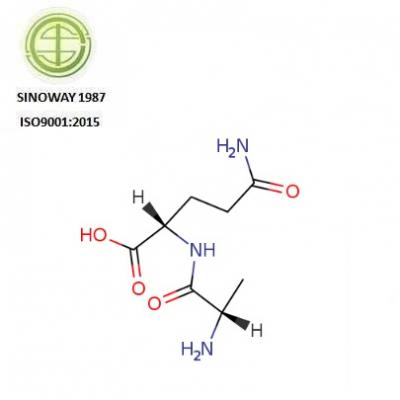
    Product Information   Product name L-Alanyl-L-Glutamine; Alanyl Glutamine; L-Ala-L-Gln; Ala-Gln CAS No. 39537-23-0 Molecular Formula C8H15N3O4 Molecular Weight 217.225 Quality Standard 98.5% up by HPLC Appearance White to almost-white crystal or crystalline powder   COA   Test Items Specifications Results Appearance White to almost-white crystal or crystalline powder White crystalline powder Specific optical rotation +9.5°~ +11.0° +10.6° ID(Physico-chemical) Positive Conforms Identification(IR) The IR spectrum of the sample corresponds to the IR spectrum of the RS Conforms pH 5.0 ~6.0 5.7   Appearance of solution Not more opalescent than reference suspension 1 Conforms Not more intensely coloured than reference solution Y1 Conforms Chlorides ≤0.02% Conforms Sulphates ≤ 0.02% Conforms Ammonium salt ≤ 0.08% Conforms Loss on Drying ≤ 0.5% 0.25% Sulphated Ash ≤ 0.1% 0.05% Iron ≤ 10ppm Conforms Heavy metals ≤ 10ppm Conforms Arsenic(AS2O3) ≤ 1ppm Conforms   Related substances 1 Impurity I ≤ 0.2% 0.01% Impurity II ≤ 0.04% ND Impurity III ≤ 0.15% ND Impurity IV ≤ 0.05% ND Impurity V ≤ 0.05% ND Impurity VI ≤ 0.5% 0.03% Any Individual unspecified impurity≤ 0.10% 0.02% Methylene dichloride ≤ 600ppm ND     Related substances 2 Impurity N ≤ 0.10% 0.04% Impurity G ≤ 0.10% ND Impurity H ≤ 0.10% ND Impurity I ≤ 0.10% ND Impurity M ≤ 0.10% ND Assay (on the anhydrous basis) 98.5%~101.0% 100.8% Residual solvents Methanol ≤ 3000ppm ND Bacterial Endotoxins < 0.05EU/mg Conforms   Microbial Limit Total aerobe ≤ 1000cfu/g <10cfu/g Total Yeast and Mold Count ≤ 100cfu/g 5cfu/g Escherichia coli Not detected ND Conclusion It conforms to all the specification   Usage   L-Alanyl-L-Glutamine(Alanyl Glutamine) is a pharmaceutically optimized, stable dipeptide that serves as a superior delivery system for glutamine in the human body. It is specifically designed for use in clinical and therapeutic nutrition, particularly when the body is under severe metabolic stress and glutamine becomes a conditionally essential amino acid. This form solves the critical problem of free glutamine’s instability in aqueous solutions.   Core Functions and Direct Clinical Applications of L-Alanyl-L-Glutamine: 1. Provides a Stable, Bioavailable Source of Glutamine. Primary Application: Parenteral Nutrition (PN) / Intravenous Formulations. Mechanism & Use: The dipeptide bond protects the glutamine molecule, allowing it to remain stable in intravenous (IV) bags during heat sterilization and storage. Once infused, it is rapidly cleaved in the blood to release bioavailable L-glutamine and L-alanine. This makes it an essential component of Total Parenteral Nutrition (TPN) for patients who cannot use their gastrointestinal tract.   2. Serves as the Primary Fuel for Intestinal Lining Cells (Enterocytes). Primary Application: Gut Health Support & Barrier Function. Mechanism & Use: Glutamine is the preferred energy source for the cells of the small intestine. Supplementation with L-Alanyl-L-Glutamine in critically ill, surgical, or oncology patients helps maintain intestinal mucosal integrity, support gut barrier function, and may reduce the risk of bacterial translocation from the gut into the bloodstream.   3. Acts as a Crucial Metabolic Substrate for Immune Cells. Primary Application: Immune Modulation in Critical Care. Mechanism & Use: Lymphocytes, macrophages, and other immune cells require glutamine for optimal function, especially during times of physiological stress. Providing this dipeptide in clinical nutrition protocols helps support immune system competence in patients with sepsis, major trauma, burns, or post-operatively. 4. Improves Nitrogen Balance and Protein Metabolism. Primary Application: Muscle Mass Preservation & Recovery. Mechanism & Use: During severe catabolic states, the body breaks down muscle protein.   L-Alanyl-L-Glutamine helps shift the body’s nitrogen balance towards a more anabolic (building) state, reducing muscle protein breakdown (catabolism) and aiding in the preservation of lean body mass.   Key Product Advantages of L-Alanyl-L-Glutamine 1. Superior Stability: Soluble and heat-stable for reliable inclusion in parenteral formulations. 2. High Bioavailability: Efficiently hydrolyzed to release active glutamine at the target site. 3. Therapeutic Efficacy: Directly addresses glutamine deficiency in critical illness.

    Tags : Ala-Gln Alanyl Glutamine 39537-23-0 L-Alanyl-L-Glutamine peptide L-Ala-L-Gln

    read more
1 2 3
A total of3pages
Send A Message
Send A Message
If you are interested in our products and want to know more details,please leave a message here,we will reply you as soon as we can.

Home

Products

about

Contact